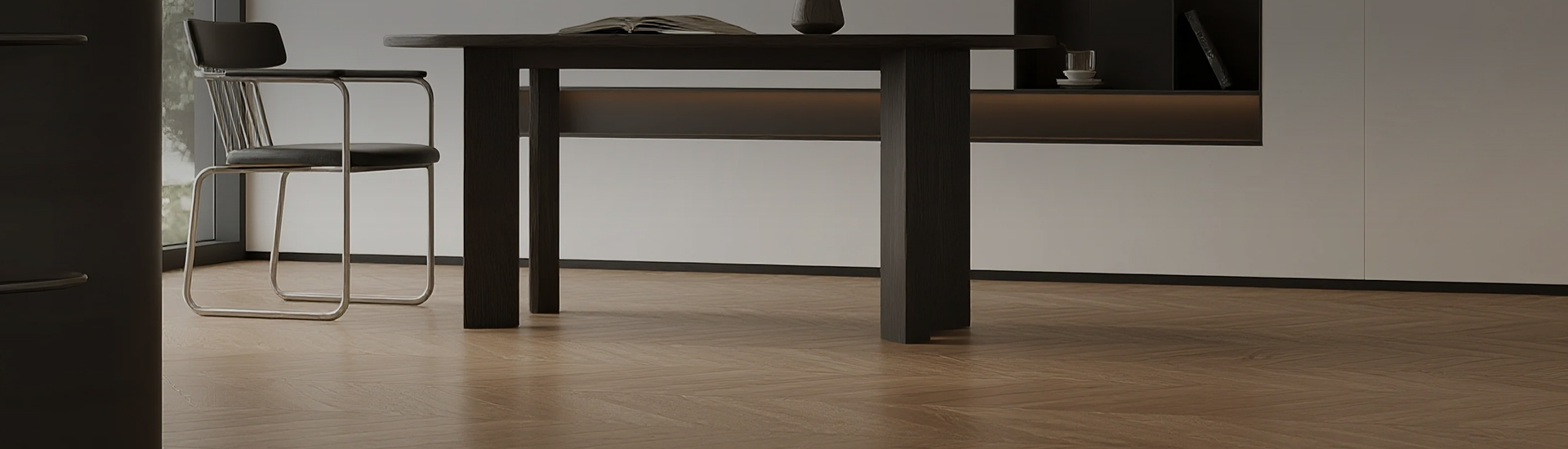
Engineered hardwood flooring sits at the intersection of natural beauty and modern engineering precision. Unlike solid wood, which is milled from a single piece of timber, engineered hardwood is constructed from multiple bonded wood layers — a genuine hardwood veneer on top, supported by cross-laminated plies beneath. This cross-grain architecture is what gives engineered hardwood its most defining technical advantage: dimensional stability across a wide range of temperature and humidity conditions. For wholesale buyers, project developers, and specification professionals, this means a flooring product that performs reliably in markets from coastal California to continental Europe, without the expansion and contraction risks that limit solid wood's application range.
Sinomaple Floors Inc is a vertically integrated manufacturer founded in 2002, operating a modern 200,000 m² production base in Suzhou, Jiangsu, China. With an annual flooring output capacity of 5,000,000 square meters and distribution reaching over 20 countries — including the United States, Canada, France, Italy, Australia, South Korea, and Japan — Sinomaple delivers engineered hardwood flooring at scale, with consistent quality backed by internationally recognized certifications.
The technical architecture of engineered hardwood defines both its performance characteristics and its commercial versatility. A standard engineered plank consists of three functional zones:
The wear layer (top veneer) is a slice of genuine hardwood — species such as European Oak, Red Oak, Ash, Walnut, or Teak — bonded to the surface. Its thickness typically ranges from 2 mm to 6 mm, and it is this layer that determines the floor's visual character: grain pattern, color tone, and natural texture. Thicker veneers also allow for sanding and refinishing over the product's lifespan, extending service life considerably.
The core is a cross-laminated assembly of wood plies oriented at perpendicular angles to one another. This engineered arrangement counteracts the natural tendency of wood to expand and contract along the grain in response to moisture shifts. The result is a far more dimensionally stable plank compared to solid wood, with significantly reduced risk of cupping, warping, or gapping. Core materials may include birch plywood, eucalyptus plywood, or HDF (high-density fiberboard), each offering different balances of rigidity, moisture resistance, and weight.
The back layer is a stabilizing ply that balances the structural tension in the plank, preventing bowing and ensuring the floor lies flat under installation loads.
Understanding this layered construction is essential for comparing engineered wood and solid wood flooring across project applications — a topic explored in depth in our technical resource library.
Sinomaple's flooring product range is organized into indoor and outdoor collections, spanning five primary wood species and two specialized outdoor series.
The Indoor Collection covers the most commercially sought-after hardwood species. European Oak is the category flagship — prized globally for its open grain, warm golden to creamy tones, and exceptional hardness. It adapts effortlessly to both traditional and contemporary interiors and is a dominant choice among interior designers and specification professionals. The Red Oak Series offers a distinctively American character, with its signature pink-red undertones and pronounced medullary rays that give installations a classic, warm ambience. Ash Series flooring features a pale, almost blond coloring with a straight, fine grain — an ideal backdrop for Scandinavian or minimalist design aesthetics. The Teak Series brings natural oil content and a golden-brown richness suited to luxury residential and boutique hospitality environments. The Walnut Series remains among the most design-forward options in the range — its deep chocolate heartwood and sweeping grain figures command attention in high-profile architectural installations.
The Outdoor Collection addresses a distinct set of technical demands. The Solid Bamboo Series leverages bamboo's rapid renewability and extreme surface hardness, making it viable for decking, terracing, and outdoor entertaining areas. The Solid Intsia Series uses Intsia timber — known for its exceptional natural durability and resistance to weathering — for applications where long-term outdoor performance is non-negotiable.
The visual and tactile character of engineered hardwood is shaped not only by the species chosen but by the surface finishing techniques applied. Sinomaple employs a range of professional finishing technologies tailored to market demand.
Smooth-finish planks with UV-cured polyurethane coatings offer a durable, cleanable surface that suits high-traffic residential and commercial environments. UV-curing hardens the coating almost instantaneously using ultraviolet light, producing a surface with excellent scratch resistance and chemical stability without extended cure times.
Wire-brushed finishes use mechanical abrasion to remove soft grain from the wood surface, leaving behind a subtly textured, open-grain feel. This technique enhances the natural character of species like Oak and Ash, creates a lived-in aesthetic, and helps conceal minor surface wear over time — a practical advantage in family homes and commercial corridors.
Handscraped or distressed textures introduce deliberate irregularities that replicate the appearance of historically aged or hand-crafted flooring. Each plank takes on a unique character, making this finish popular for heritage-style interiors, farmhouse aesthetics, and upscale hospitality settings.
Oil finishes penetrate the wood rather than sitting on the surface as a film coating. They enhance the natural warmth and tactile depth of the veneer, are easier to spot-repair than film finishes, and are favored in European markets where authenticity of feel is prioritized. The tradeoff is that oiled floors require periodic re-oiling maintenance.
Matte, satin, and semi-gloss sheen levels allow further customization to match client specifications and project design briefs. For buyers and designers interested in the latest surface treatment directions, our recent editorial on light wood engineered flooring construction and design trends outlines how finish innovation is reshaping the market.
Selecting engineered hardwood at the wholesale or project level requires a clear understanding of the technical parameters that govern performance, compatibility, and compliance. The following ranges reflect typical specifications within Sinomaple's engineered hardwood product lines, though exact values vary by series and design.
Plank thickness generally falls in the range of 12 mm to 21 mm for engineered products. Thicker planks offer a more solid underfoot feel, better acoustic dampening, and higher capacity for sanding and refinishing. Thinner profiles are suited to installations where floor-to-ceiling height is a constraint.
Wear layer thickness — the actual hardwood veneer — typically ranges from 2 mm to 6 mm. A 4 mm or thicker wear layer allows for one or more sanding cycles, extending the floor's commercial lifespan and justifying higher initial investment for long-term projects.
Plank width has trended significantly wider in contemporary design. While traditional strip flooring ran at 60–90 mm, today's market strongly favors wide plank formats of 120 mm to 220 mm and beyond, which create a more open, expansive visual effect particularly suited to larger rooms and open-plan layouts.
Installation systems include tongue-and-groove profiles compatible with nail/staple, glue-down, or floating (click-lock) methods. Floating installation is suitable above or on grade; glue-down is preferred on concrete slabs or in high-traffic commercial environments; nail/staple installation applies to timber subfloor systems in above-grade residential construction.
Formaldehyde emissions are controlled to comply with CARB Phase 2 and EPA TSCA Title VI standards — among the most stringent formaldehyde emission limits for composite wood products globally. Sinomaple maintains SCS-verified CARB and EPA compliance certifications, providing wholesale buyers with the documentation required for market access in North America.
For an in-depth look at how these technical decisions play out across real projects, the engineered wood floorboards technical and design guide on our news platform covers specification logic in detail.
Dimensional stability is the defining technical differentiator of engineered hardwood over solid wood, and it is worth examining in depth because it directly impacts project outcome in climates with variable humidity and temperature.
Solid wood is hygroscopic — it absorbs and releases moisture from the surrounding air, causing the cells to swell and shrink across the grain. In wide plank formats or in climates with pronounced seasonal humidity swings, this results in visible gaps in dry conditions and potential cupping or buckling in humid conditions. These problems constrain solid wood's use to above-grade installations with controlled environments.
Engineered hardwood's cross-laminated core fundamentally mitigates this behavior. Because adjacent plies run perpendicular to each other, the expansion force in any one ply is mechanically restrained by the opposing orientation of its neighbors. The result is a plank that responds to moisture changes in a far more controlled, predictable manner — with typical cross-grain movement reduced by up to 60–70% compared to equivalent solid wood.
This enables engineered hardwood to be installed in environments where solid wood would be problematic: kitchens, bathrooms adjacent to wet areas, basement conversions, concrete slab constructions, and installations over underfloor radiant heating systems. For radiant heat applications, engineered hardwood is strongly preferred over solid wood because its stable core tolerates the cyclical thermal changes without excessive movement.
The hybrid engineered wood flooring technical guide published by Sinomaple's editorial team explores how next-generation core constructions, including WPC and SPC hybrid variants, further extend the moisture resistance envelope for demanding installation environments.
Sustainability is no longer a peripheral concern in engineered hardwood procurement — it is a central criterion for many buyers, specifiers, and end customers. Sinomaple's commitment to environmental responsibility is embedded across its sourcing, manufacturing, and certification processes.
FSC-COC (Forest Stewardship Council Chain of Custody) certification confirms that the wood raw materials used in production are sourced from responsibly managed forests, providing buyers with documented supply chain traceability from forest to finished plank.
CFCC-PEFC certification through the China-based Program for the Endorsement of Forest Certification extends this chain-of-custody assurance within the context of Chinese and internationally recognized forest management standards.
LEED-compatible products (certified for both Oak and Walnut Wood species) allow architects and developers pursuing LEED green building certification to use Sinomaple's flooring as part of their materials and resources credit strategy.
FloorScore SCS-FS certification verifies that the finished flooring products meet strict indoor air quality standards for volatile organic compound (VOC) emissions — a critical specification for residential, educational, and healthcare environments.
ISO 14001 environmental management system certification covers Sinomaple's manufacturing operations, ensuring that factory-level environmental impacts are systematically measured, managed, and improved. ISO 45001 occupational health and safety certification and ISO 9001 quality management certification complete the operational governance framework.
These credentials collectively provide the compliance documentation that international wholesale buyers and project specifiers require for building permit submissions, green building programs, and corporate procurement policies. Sinomaple's proprietary laboratory — equipped with a 1-cubic-meter VOC environmental chamber, gas sampler, and gas chromatograph — enables in-house TVOC testing to maintain rigorous ongoing quality control independent of third-party scheduling.
Industry analysts have noted a marked increase in buyer demand for verified sustainability credentials alongside product performance data. Sinomaple's editorial on Oak engineered wood flooring sustainability and durability trends examines how these market forces are shaping purchasing decisions across North America and Europe.
Correct installation is the single most important factor in determining long-term engineered hardwood floor performance, regardless of product quality. The following guidelines apply broadly to Sinomaple's indoor engineered flooring lines.
Acclimation is the mandatory first step. Planks must be stored in the installation environment — opened or in partially opened cartons — for a minimum of 48 to 72 hours before installation begins. This allows the wood to equilibrate to the ambient temperature and relative humidity of the space, reducing post-installation movement. Target installation conditions are typically 60–80°F (15–27°C) with relative humidity between 35% and 65%.
Subfloor preparation must ensure the substrate is structurally sound, clean, dry, and flat within ±3 mm over a 1.8-meter span. Concrete subfloors should be fully cured (minimum 60 days for new pours) and tested for moisture content — typically using a calcium chloride test or relative humidity probe. Acceptable moisture vapor emission rates for glue-down installation are generally below 3 lbs per 1,000 sq ft per 24 hours (ASTM F1869).
Nail/staple installation is the traditional method for timber subfloors. Planks are fastened mechanically through the tongue at intervals of 200–250 mm. This method provides a secure, solid-feel installation and is standard practice above-grade over plywood or OSB subfloors of adequate thickness (minimum 19 mm).
Glue-down installation uses a full spread of elastic adhesive — typically a polyurethane or MS polymer flooring adhesive — applied to the subfloor surface. This is the preferred method for concrete substrates and high-traffic commercial environments, as it eliminates movement, provides acoustic damping, and allows installation without expansion gaps at walls in large-format rooms.
Floating installation (click-lock or glueless tongue-and-groove) requires no mechanical or adhesive fastening to the subfloor. Planks are locked together and float as a connected assembly over an underlayment. This installation type is the fastest to execute, easiest to replace, and most widely used in DIY and renovation contexts. Expansion gaps of minimum 10–12 mm at all fixed perimeters are mandatory.
Moisture management requires vapor barriers (typically 6-mil polyethylene film or equivalent) over concrete slabs in all floating installations, and is strongly recommended in glue-down applications on ground-level concrete. In climates with high seasonal humidity variation, vapor-permeable smart membranes may be specified.
The dimensional stability and installation versatility of engineered hardwood make it suitable across a broader range of environments than solid wood.
In residential settings, engineered hardwood is appropriate for living rooms, dining rooms, hallways, bedrooms, kitchens, and adjoining utility spaces. Its ability to be installed over radiant heating systems — provided the surface temperature does not exceed 27°C — makes it compatible with modern energy-efficient home heating strategies.
In commercial environments, the specification of engineered hardwood requires attention to traffic classification. Floors in hotel lobbies, boutique retail, restaurants, and corporate office receptions benefit from harder species selections (Oak, Teak) combined with wear-resistant UV-cured finish systems and appropriate plank thickness to allow refinishing as part of long-term maintenance contracts.
For below-grade and on-grade concrete slab installations — previously a domain dominated by resilient and ceramic tile — engineered hardwood provides a genuine wood aesthetic previously unavailable without the dimensional risk of solid products.
The Dark Oak Engineered Flooring market trends and fire-resistance innovation report on Sinomaple's news platform explores how commercial specification is evolving with emerging technical standards, particularly for hospitality and institutional applications.
Surface hardness is a critical selection criterion for engineered hardwood, particularly in commercial and high-traffic residential applications. The Janka hardness test measures the force required to embed a steel ball to half its diameter into a wood surface — it is the industry standard for comparing species resistance to denting and wear.
European Oak registers approximately 1,290 lbf on the Janka scale — durable enough for most residential and light commercial applications. Red Oak measures around 1,290 lbf as well, with slightly softer characteristics than White Oak and a moderate resistance to denting. Ash typically rates at approximately 1,320 lbf, offering slightly superior hardness. Walnut, at approximately 1,010 lbf, is somewhat softer, which contributes to its characteristic warmth and workability but warrants consideration in high-traffic or commercial specifications. Teak, valued more for its natural oil content and weather resistance than raw hardness, falls in a similar range.
For a detailed comparison between walnut and other premium species in design-forward contexts, the editorial on walnut engineered wood flooring technical and buying considerations provides comprehensive guidance for specifiers and buyers.
Sinomaple's production operations at the Suzhou, Jiangsu facility are governed by a multi-layered quality assurance framework that spans raw material procurement through finished product inspection.
The ISO 9001:2015 quality management system provides the foundational process controls for production consistency. Statistical process control (SPC) is applied at key production stages — veneer slicing, core lamination, adhesive pressing, sanding, and coating — to detect and address variation before it translates into finished product defects.
The company's proprietary laboratory conducts in-house testing for formaldehyde emissions (meeting CARB Phase 2 / TSCA Title VI thresholds), total VOC (TVOC) output, surface abrasion resistance (TABER test), bond strength (cross-cut adhesion test), and dimensional tolerance verification. Third-party verification through SCS Global Services provides independent audit confirmation of CARB, EPA, and FloorScore compliance status.
Raw material sourcing is controlled through FSC-COC and CFCC-PEFC chain-of-custody protocols, ensuring that veneer species and core ply materials are traceable to certified sources. Veneer grading is conducted to NHLA (National Hardwood Lumber Association) or equivalent regional standards, with clear grade, select, and character grade options available depending on product line and client specification.
This quality infrastructure, developed over more than two decades of manufacturing and export operations, underpins Sinomaple's reputation as a reliable supply partner for buyers in regulated markets. Learn more about the company's history and quality commitments on the About Us page.
Engineered hardwood flooring requires a straightforward maintenance regime to retain its appearance and structural integrity over its designed service life.
Regular cleaning should use a dry or slightly damp microfiber mop. Excess water should never be used on wood flooring surfaces — standing water accelerates finish deterioration and can penetrate to the core in floating installations, causing swelling. Proprietary pH-neutral wood floor cleaners designed for the applicable finish type (oil or lacquer/polyurethane) should be used for wet cleaning.
High-traffic areas benefit from area rugs or runners positioned to reduce cumulative abrasion on the wear layer. Furniture legs should be fitted with felt pads to prevent point-load scratching. Entry mats at exterior door thresholds reduce grit and particulate matter — a primary cause of surface finish micro-abrasion over time.
Lacquer-finished floors may be recoated (screen and recoat) without full sanding when finish dulling occurs, significantly extending the period before full refinishing is required. Oil-finished floors can typically be spot-repaired with matching oil products — an advantage in commercial contexts where localized wear patterns develop around service counters or heavily trafficked access points.
Fully refinishable wear layers (typically 3 mm or thicker) allow multiple sanding and re-coating cycles over the floor's lifespan, making engineered hardwood a genuinely long-term investment for both residential and commercial clients. For service support and frequently asked questions about installation and maintenance, visit the Sinomaple Service page.
Sinomaple Floors Inc offers wholesale buyers and project developers a combination of manufacturing scale, product breadth, certification depth, and supply chain reliability that is difficult to match in the global engineered hardwood market.
The company's vertically integrated model — from raw material procurement and veneer preparation through pressing, finishing, quality testing, and export logistics — provides buyers with single-source accountability and reduces supply chain complexity. An annual production capacity of 5,000,000 square meters of flooring ensures that large-volume orders can be fulfilled without timeline compression or quality compromise.
Sinomaple's strategic partnerships with major Chinese real estate developers and its retail network of over 500 domestic terminals across 30 provinces demonstrate production consistency proven at commercial scale. Its export track record across more than 20 countries confirms experience with the documentation, compliance certification, and logistics requirements of diverse international markets.
The company's Industry 4.0-enabled production capabilities incorporate smart manufacturing technologies that improve process control, traceability, and production flexibility — supporting custom specification requirements from OEM and private label clients. Flexible service models, including personalized support for distributors and project buyers, make Sinomaple a practical partner across order sizes and specification complexity levels.


